
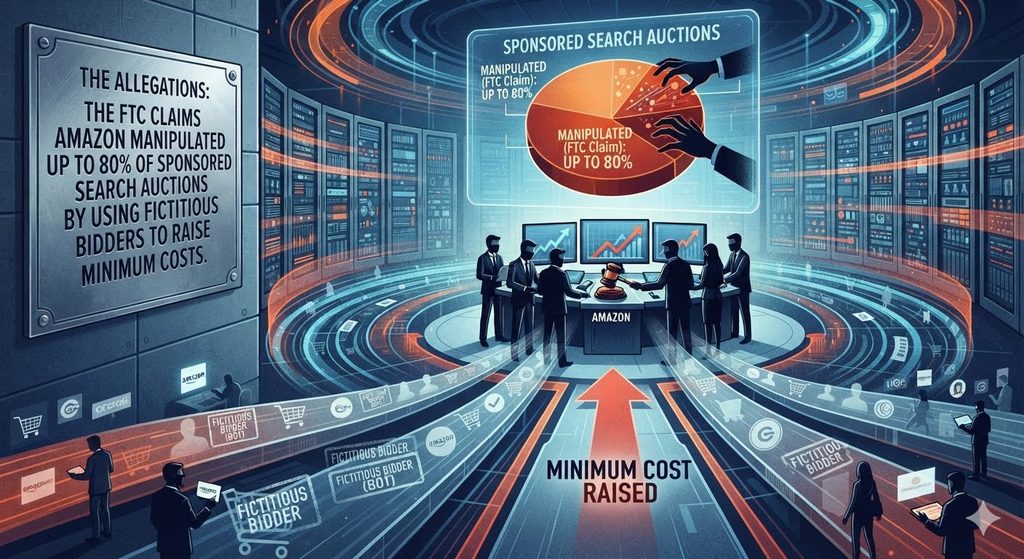
The FTC claims Amazon manipulated up to 80% of sponsored search auctions by using fictitious bidders to raise minimum costs.
1. How the System Was Supposed to Work:
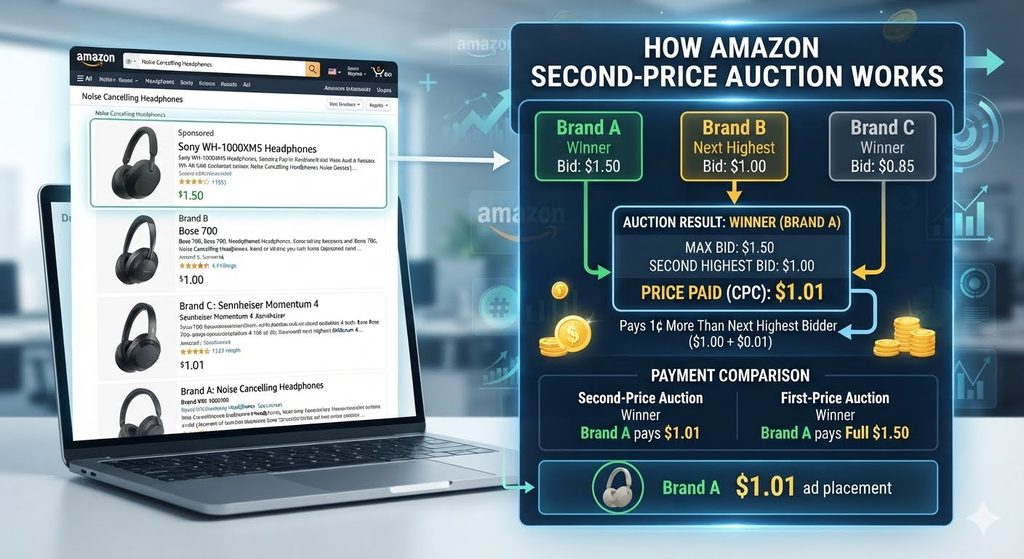
When brands want their products to appear at the top of Amazon search results (as a “Sponsored” listing), they enter a digital auction and submit a maximum bid per click. Amazon told advertisers it used a “second-price” auction. In a true second-price auction, the winner only pays one cent more than the next highest bidder—not their own full maximum bid.
2. What Amazon Allegedly Did (“Fictitious Bidders”):
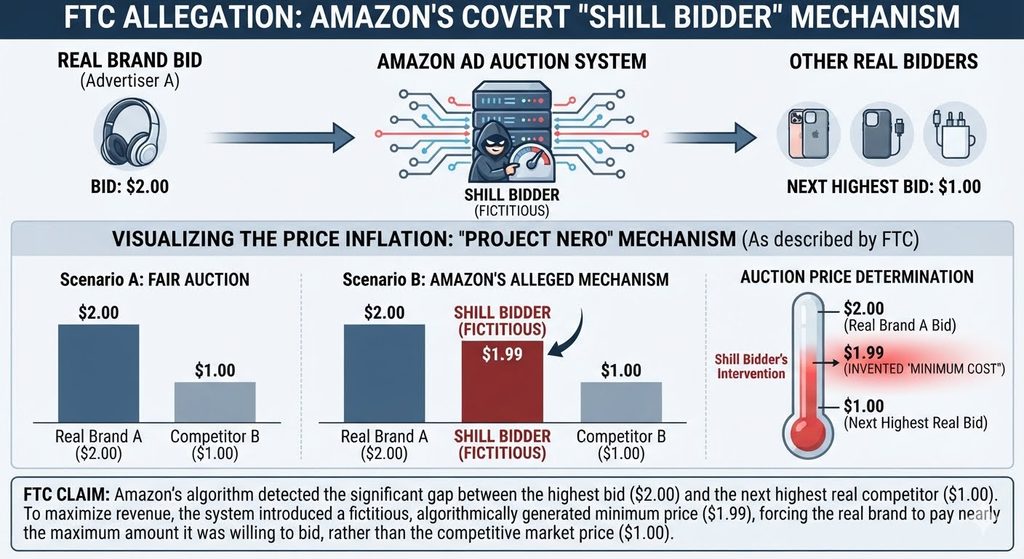
The FTC claims Amazon covertly introduced a mechanism that acted like a “shill bidder” or fake competitor. If a real brand bid $2.00 and the next highest real competitor only bid $1.00, Amazon’s system would essentially invent a fictitious “minimum cost” right below $2.00.
3. The Impact (“Manipulated up to 80%”):
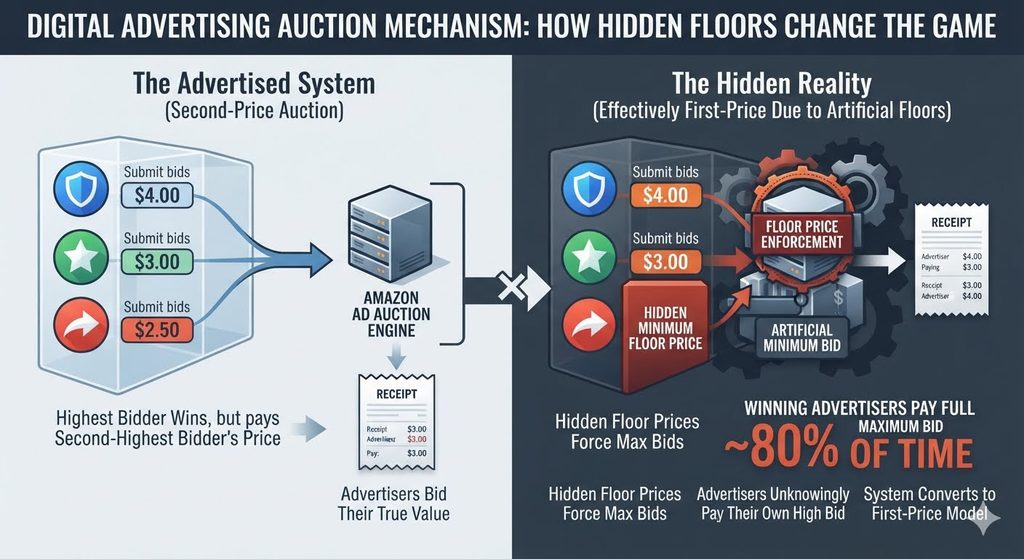
Because of these artificial floor prices, winning advertisers were forced to pay their own full maximum bid price roughly 80% of the time. This effectively converted Amazon’s advertised system into a “first-price” auction without the advertisers knowing.
Why This Matters
Secret Surcharges: The FTC argues this was a hidden scheme that brought Amazon tens of billions of dollars in extra revenue while bleeding over 500,000 small and medium businesses.
Consumer Costs: The government states these inflated advertising costs were ultimately passed down to everyday shoppers in the form of higher product prices.
Amazon’s Stance
Amazon strongly denies the allegations, calling the lawsuit “misguided”. They argue that the system prioritizes “ad relevance” over bid size, that average ad prices actually dropped 50% between 2019 and 2025, and that the FTC fundamentally misunderstands how digital ad auctions work